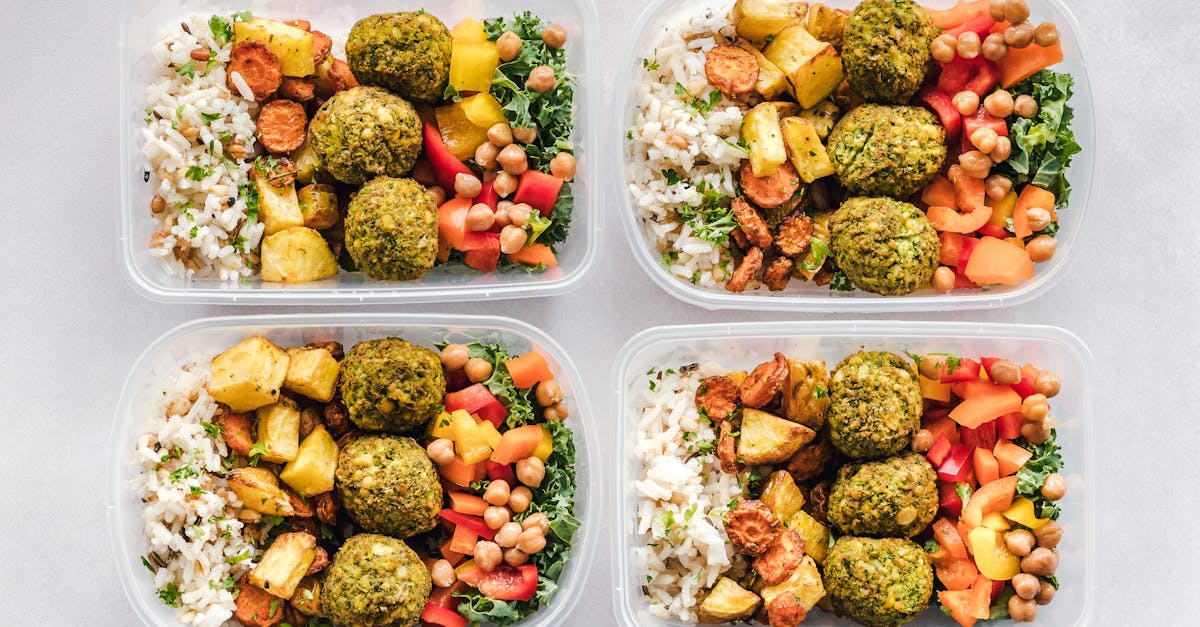
The 60-Minute Rule for Meal Prep: It's About Strategy, Not Just Speed
For years, the ‘60-minute meal prep’ challenge has circulated through productivity and wellness circles. The idea is simple: dedicate one hour, typically on a Sunday, to batch cook or assemble enough food to last you through the week. On the surface, it sounds like a miracle solution – imagine regaining hours of your evenings, ditching the takeout menus, and consistently eating healthy without the daily grind. I bought into this idea wholeheartedly, convinced that if I just moved faster, chopped quicker, and stacked my containers more efficiently, I’d unlock the meal prep nirvana.
What I discovered, after countless frantic Sunday afternoons and inevitable mid-week burnout, is that the 60-minute rule is often deeply misunderstood. It’s not a race against the clock where speed is the sole victor. Instead, it’s a framework for strategic efficiency, a mental shift that prioritizes thoughtful planning and simplified execution over sheer velocity. Many people crash and burn with this concept not because they’re slow cooks, but because they miss the foundational elements that make that 60 minutes truly impactful. It’s about building a sustainable system, not just rushing through a single session. I learned the hard way that a rushed hour often leads to boredom, wasted ingredients, and a return to old habits by Wednesday. What changed everything for me was stepping back to understand the principles behind that 60-minute goal, rather than just fixating on the stopwatch.
Key Takeaways
- The 60-minute meal prep rule is a guide for strategic efficiency, not a speed challenge.
- Successful short meal prep prioritizes ingredient versatility and minimizes complex recipes.
- Focusing on ‘components, not complete meals’ prevents boredom and allows for daily customization.
- A ‘power hour’ of prep must be supported by thoughtful weekly planning and smart grocery shopping.
The Real Enemy Isn’t Time, It’s Decision Fatigue
The biggest misconception I see with the 60-minute meal prep rule is the belief that if you can just cram enough cooking into that hour, you’ve won. The truth is, the mental drain of figuring out what to cook, what ingredients you need, and how to combine them each day is often a far greater obstacle than the actual cooking time. This is where decision fatigue silently sabotages even the best intentions.
In my early attempts, I’d try to plan five distinct meals, each with its own ingredient list and cooking method, all to be executed within that hour. The planning itself would often take 30-45 minutes, leaving me a stressed-out mess before I even turned on the stove. By the time I started cooking, I was already mentally exhausted, and the ‘fun’ of meal prep quickly evaporated. The mistake I see most often is failing to simplify the choices. A genuinely efficient 60-minute prep session isn’t about doing more in less time; it’s about doing less more effectively.
What changed everything for me was a radical simplification of my weekly menu. Instead of planning ‘Chicken Stir-fry,’ ‘Lentil Soup,’ and ‘Sheet Pan Salmon,’ I started thinking in components. I’d pick one or two protein sources (e.g., a big batch of roasted chicken breast, a pot of hard-boiled eggs), one or two grain bases (quinoa, brown rice), and a variety of roasted or raw vegetables. This shift immediately slashed my decision-making time by about 70%. When I stepped into the kitchen for my prep hour, I knew exactly what I was doing: cook X, cook Y, chop Z. This laser focus eliminated the mental drag, allowing the physical tasks to flow much more smoothly within the allocated time. By Monday morning, I wasn’t just armed with food; I was armed with mental clarity, ready to face the week without the daily ‘what’s for dinner?’ battle.
Focus on Versatile Components, Not Complete Meals
When people aim for the 60-minute meal prep, they often try to prepare full, distinct meals for each day. This approach is precisely what makes the time constraint feel impossible and leads to flavor fatigue. Imagine eating the exact same chicken and broccoli meal for lunch five days in a row – it’s a recipe for culinary boredom by Wednesday.
The real secret to making 60 minutes count is to focus on versatile, mix-and-match components. Think of your meal prep as building a healthy food Lego set. You’re creating the foundational bricks that can be combined in different ways throughout the week, ensuring variety without needing to cook five different dishes from scratch.
For example, instead of making five servings of chicken stir-fry, I’ll roast a large batch of chicken breast seasoned simply with salt, pepper, and garlic powder. Simultaneously, I’ll cook a big pot of quinoa or farro and roast a tray of mixed vegetables like bell peppers, zucchini, and sweet potatoes. In that same hour, I might also wash and chop a large container of leafy greens, slice some cucumbers, and whip up a simple vinaigrette.
On Monday, I can combine chicken, quinoa, and roasted veggies for a hearty bowl. On Tuesday, I might add the chicken and raw greens to a wrap with the vinaigrette. Wednesday could be roasted veggies and quinoa with a fried egg. This strategy achieves several critical goals within that 60-minute window:
- Reduced Cooking Time: Roasting and boiling/steaming concurrently is far faster than sequential stir-frying, simmering, and baking for multiple dishes.
- Ingredient Efficiency: Many ingredients overlap (e.g., garlic, onions, common vegetables), streamlining your grocery list and reducing waste.
- Prevents Boredom: The ability to recombine elements keeps things fresh. You’re not eating the same meal, but rather variations on a theme.
- Flexibility: If plans change, individual components are easier to adapt or save than a fully assembled meal.
My personal experience with this shift was profound. I stopped dreading my meal prep session and started viewing it as a creative challenge. By optimizing for versatility, my 60 minutes in the kitchen translated into genuine freedom and enjoyable meals all week long. The perceived limitation of the 60-minute rule becomes an advantage when you use it to force smart, modular food choices.
Your ‘Prep’ Hour Starts with Smart Shopping and Planning
Many people think the ‘60-minute rule’ clock begins when the first knife hits the cutting board. This is a critical error. The true efficiency of that 60-minute power session is dictated by the groundwork you lay before you even enter the kitchen. A chaotic pantry, missing ingredients, or an uninspired menu can easily double your actual prep time or, worse, lead to abandoning the effort altogether.
What changed everything for me was realizing that my ‘prep’ hour actually begins with a well-thought-out, 15-minute planning session earlier in the week – usually Saturday morning, while I sip my coffee. This mini-session encompasses:
- Reviewing Your Week Ahead: Are there any nights I’ll be eating out? Are there any specific dietary needs or cravings for the coming days? This prevents over-prepping or making food no one wants.
- Component Selection: Based on the above, I’ll choose 2-3 proteins, 1-2 grains, and 2-3 types of vegetables or fruits. I aim for at least one raw option and one cooked option for variety.
- Grocery List Generation: I meticulously list every ingredient needed, checking my pantry and fridge first to avoid buying duplicates. This saves significant time (and money) at the store.
- Recipe Consolidation (Optional but Recommended): While I focus on components, sometimes I’ll choose one simple ‘hero’ recipe, like a big batch of soup or chili, that also uses my prep components. I’ll print or pull up the recipe on my tablet so it’s ready.
My ideal grocery run then happens right after this planning session. I aim to purchase everything by Saturday afternoon. By Sunday, when my 60-minute timer starts, all ingredients are in the fridge, cleaned (if necessary, like greens), and ready for action. This pre-prep ensures that my ‘power hour’ is spent executing, not searching, wondering, or washing. In my experience, skipping this crucial planning step is the single biggest reason why most 60-minute meal prep attempts fail. You can’t optimize your cooking time if your inputs are disorganized.
Embrace Batch Cooking, Don’t Fear Repetition
The fear of eating the same thing day after day is a common stumbling block for those trying to adhere to a short meal prep window. However, to truly leverage a 60-minute prep, you must embrace a degree of batch cooking. This means cooking larger quantities of staple items that can be stretched across multiple meals. The key is how you approach that repetition.
Initially, I made the classic mistake of cooking a huge pot of chili and expecting to eat it for lunch every single day. By Wednesday, the very sight of it made me groan. The challenge isn’t the batch cooking itself, but the lack of subtle variety.
What actually works, within a 60-minute framework, is to batch cook items that are inherently adaptable. For example:
- Proteins: A large pan of roasted chicken thighs can be used in salads, wraps, grain bowls, or even added to a quick pan sauce for dinner. Hard-boiled eggs are instant protein for breakfast or snacks.
- Grains: A big pot of brown rice or farro can form the base of many different meals. You can add different spices, herbs, or sauces each day to change its character.
- Roasted Vegetables: A sheet pan full of roasted broccoli, carrots, and sweet potatoes can be a side dish, an addition to a salad, or blended into a soup later in the week.
During my 60-minute session, I prioritize these batch-friendly items. I’ll get multiple things cooking simultaneously: rice in one pot, chicken roasting in the oven, and vegetables roasting on another tray. This overlapping cooking ensures maximum output for my limited time. By having these foundational elements ready, daily meal assembly becomes a matter of mixing and matching, perhaps adding a fresh garnish, a different sauce, or a sprinkle of cheese. This minimal daily effort provides enough variation to prevent palate fatigue without requiring additional cooking.
My perspective on ‘repetition’ completely shifted. It’s not about eating the identical meal, but about appreciating the convenience of having healthy, prepared food components that can be quickly transformed into something new each day. This approach honors the 60-minute time constraint while delivering sustainable, enjoyable eating throughout the week.
The Power of the Right Tools and Strategic Clean-Up
An often-overlooked aspect of successful 60-minute meal prep is the strategic use of kitchen tools and an efficient clean-up process. Without these, your ‘power hour’ can quickly devolve into a chaotic, time-consuming mess, leaving you more exhausted than energized.
In my early days, I’d wrestle with dull knives, flimsy cutting boards, and a single small baking sheet, thinking I could make it work. The result? Slower prep, more frustration, and an overwhelming pile of dishes at the end. The mistake I see most often is underestimating how much the right equipment can amplify your efforts and how a lack of clean-up strategy can negate your time savings.
What changed everything for me was investing in (and actually using) a few key items, alongside a ‘clean-as-you-go’ mentality:
- Sharp Knives and Large Cutting Boards: A good chef’s knife and a large, stable cutting board make chopping vegetables incredibly faster and safer. I realized I was losing precious minutes (and risking my fingers) with inferior tools. Having two large cutting boards means I can separate raw proteins from vegetables, minimizing cross-contamination and the need for immediate washing.
- Multiple Baking Sheets and Large Pots: When batch cooking, having several baking sheets allows you to roast different vegetables or proteins simultaneously. Similarly, a large stockpot is essential for cooking grains or boiling eggs in bulk. This simultaneous cooking is crucial for hitting that 60-minute target.
- Food Processor/Immersion Blender: While not essential for every prep, these can be massive time-savers for chopping large quantities of vegetables, making sauces, or blending soups. Chopping a week’s worth of onions and peppers in 30 seconds versus 10 minutes is a game-changer.
- A ‘Clean-As-You-Go’ Mindset: As soon as an ingredient is prepped or a pan is emptied, I make an effort to either rinse it and place it directly in the dishwasher or give it a quick hand wash. By the time my cooking is done, the majority of the clean-up is already complete, leaving me with only minimal dishes and containers to handle. This prevents the dreaded ‘mountain of dishes’ that can make future meal prep sessions feel daunting.
By optimizing my tools and integrating clean-up into the process, my 60-minute prep sessions became far more streamlined and enjoyable. It’s not just about cooking faster; it’s about minimizing friction at every step, from the first chop to the final wipe-down. This holistic approach is what truly makes the 60-minute rule a sustainable and effective strategy for meal prep.
Frequently Asked Questions
Can I really prep a week’s worth of meals in just 60 minutes?
Yes, but it requires a strategic mindset. The goal isn’t to prepare five unique, complex meals. Instead, it’s about batch cooking versatile components (like proteins, grains, and roasted vegetables) that can be mixed and matched into various combinations throughout the week, significantly reducing daily cooking time and decision fatigue. This focus on components, supported by thoughtful planning and efficient tools, makes the 60-minute window achievable.
What are the most common mistakes people make when trying the 60-minute rule?
The most common mistakes include trying to cook too many distinct, complex meals in one hour, failing to plan and grocery shop efficiently beforehand, and not focusing on versatile components. Many also neglect to streamline their kitchen setup or clean as they go, leading to a messy, overwhelming experience that discourages future attempts.
What kinds of meals or components work best for a 60-minute prep?
Meals built around simple cooking methods that can run simultaneously are ideal. Think roasted chicken or fish, hard-boiled eggs, cooked grains (rice, quinoa, farro), roasted or steamed vegetables, and pre-chopped raw vegetables and fruits. Soups and stews can also be efficient if they primarily involve simmering after quick initial prep. The key is adaptability – components that can be seasoned differently or combined in new ways throughout the week.
How do I prevent getting bored with my meal-prepped food?
Prevent boredom by focusing on versatile components rather than pre-assembled meals. Cook bland bases that can be flavored daily with different sauces, spices, fresh herbs, or garnishes. For example, plain roasted chicken can be added to a curry, a salad with vinaigrette, or a taco bowl with salsa. Having a variety of simple condiments on hand makes a huge difference in creating new flavor profiles from the same base ingredients.
What kitchen tools are essential to make the 60-minute meal prep successful?
Essential tools include sharp knives, large cutting boards (preferably two), multiple baking sheets, and large pots for batch cooking grains and proteins. A food processor or immersion blender can also be a significant time-saver for chopping or blending. Additionally, having enough airtight containers for storage is crucial for organized and safe food keeping.
How important is planning and grocery shopping for successful 60-minute meal prep?
Planning and grocery shopping are absolutely critical – they are the invisible first steps of your 60-minute prep. A well-thought-out plan, including a detailed grocery list and reviewing your week’s schedule, prevents lost time in the kitchen from indecision or missing ingredients. Completing your shopping before your prep session ensures your 60 minutes are spent purely on execution, maximizing efficiency.
Conclusion
The 60-minute meal prep rule isn’t a magic bullet, nor is it a rigid challenge designed to test your culinary speed. It’s a powerful framework for strategic thinking in the kitchen that, when understood correctly, can liberate significant time and mental energy throughout your week. By shifting your focus from frantic cooking to thoughtful planning, component-based prep, and efficient execution, you can transform meal prep from a dreaded chore into a sustainable habit. Start by simplifying your choices, embracing versatile ingredients, and ensuring your planning is done before the clock even begins. The real reward isn’t just saving time; it’s the consistent peace of mind that comes from knowing you’re nourishing yourself and your family with delicious, homemade food, day after day.
Written by Michael Davies
Budgeting, meal planning, and sustainable living
With a background in culinary arts and personal finance, Michael is an expert at making the most of everyday resources.
You Might Also Like

7 Reasons Your Smart TV Feels More Frustrating Than Fantastic
Unlock your smart TV's full potential by understanding common frustrations like slow performance and privacy concerns, and learn practical fixes.

A Beginner's Guide to Building a Robust Home Network
Unlock reliable Wi-Fi and secure connections with this beginner's guide to building a robust home network. Go beyond the basics for seamless streaming, gaming, and working.

A Practical Checklist for Choosing a Wi-Fi Router for Large Homes
Don't just buy the biggest numbers. Discover what truly matters when selecting a Wi-Fi router for expansive homes to ensure consistent, fast coverage.