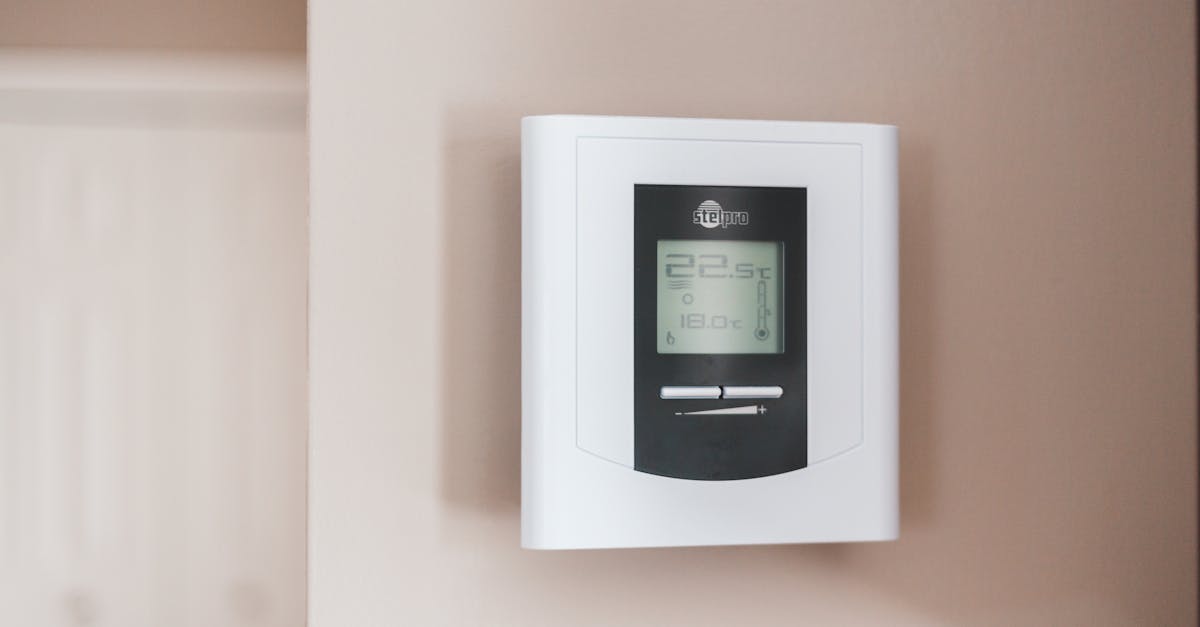
Smart Thermostat Temperature Swing: Why 3 Degrees Is the Sweet Spot for Real Energy Savings
You’ve invested in a smart thermostat, hoping to trim those ever-rising energy bills. You’ve programmed schedules, maybe even dabbled with geofencing, but the savings aren’t quite stacking up as you expected. In my experience, one of the biggest misconceptions about smart thermostats is that simply setting a schedule or letting it ‘learn’ is enough. What changed everything for me, and for many I’ve advised, was understanding the temperature swing – specifically, why a 3-degree variance is the sweet spot for maximizing efficiency without sacrificing comfort. Many homeowners, myself included initially, tend to keep their home temperature rigidly consistent, believing it prevents the system from ‘working harder’ to catch up. This couldn’t be further from the truth. The mistake I see most often is allowing only a 1 or 2-degree deviation, which essentially keeps your HVAC system cycling on and off far too frequently, negating the very savings a smart thermostat promises.
Key Takeaways
- A rigid 1 or 2-degree temperature swing keeps your HVAC system cycling inefficiently, increasing energy consumption.
- Implementing a 3-degree temperature swing allows your system to run longer, more efficient cycles, leading to significant energy savings.
- Prioritize efficient system operation over constant temperature for genuine cost reduction and improved HVAC longevity.
- Leverage your smart thermostat’s scheduling and ‘away’ modes to maintain the 3-degree swing effectively throughout your day.
The Fallacy of Constant Temperature: Why Your HVAC Hates Micro-Adjustments
For years, I was convinced that maintaining a near-constant temperature in my home was the most efficient approach. My old programmable thermostat was set to 72°F during the day, and I’d grudgingly bump it to 70°F at night. When I upgraded to a smart thermostat, I simply transferred this rigid thinking. My logic was simple: if the temperature only ever dropped one degree, the system would just have to run for a few minutes to bring it back up, right? Wrong. What I quickly learned, after analyzing my own energy reports and diving deep into HVAC mechanics, is that the most energy-intensive part of an HVAC system’s operation is starting up. Each time your compressor kicks on (for cooling) or your furnace ignites (for heating), there’s a significant power draw. If your thermostat is set to immediately react to a tiny 1-degree shift, it’s constantly starting and stopping, leading to what’s known as ‘short cycling.’
Short cycling is a silent energy killer. Think of it like city driving versus highway driving for your car. In the city, you’re constantly stopping and starting, burning more fuel. On the highway, you maintain a steady speed, which is far more efficient. Your HVAC system operates similarly. A 1-degree swing means your system might run for just 5-10 minutes before hitting the target, then shut off, only to turn back on 15 minutes later when the temperature drifts a degree again. This incessant starting and stopping wastes energy and, critically, puts undue wear and tear on your expensive HVAC components. My energy bills barely budged, and I often found my system running more than I thought it should, despite the ‘smart’ features.
The Power of the 3-Degree Buffer: Maximizing Runtime Efficiency
The revelation for me came when I started experimenting with a wider temperature swing, specifically pushing it to 3 degrees. For instance, instead of 72°F maintaining, I’d set it to cool no lower than 70°F and allow it to drift up to 73°F before kicking back on. This felt counter-intuitive at first. Wouldn’t the system have to work harder to bring the temperature down three degrees than one? In theory, yes, but in practice, it’s about the efficiency of the cycle. When you allow a 3-degree swing, your HVAC system runs for a longer, more sustained period. This longer run time allows the system to reach its peak operational efficiency.
For cooling, a longer cycle effectively dehumidifies your home, making 73°F feel just as comfortable as 70°F in a muggier environment. For heating, it allows the warmth to distribute more evenly throughout your home, reducing cold spots. More importantly, it drastically reduces the number of times your system starts up in an hour. Instead of multiple short, inefficient cycles, you get fewer, longer, and far more efficient cycles. My data showed a clear drop in compressor cycles per day, and a noticeable decrease in energy consumption. The house still felt comfortable, but the system wasn’t constantly drawing power.
The Real-World Impact: What 3 Degrees Saved Me Annually
Implementing this 3-degree swing was a game-changer for my household budget. Before the change, my average monthly electricity bill during peak summer (July-August) was around $220-$250, primarily driven by AC usage. During winter, heating pushed it to $180-$200. After adjusting my smart thermostat to allow for a consistent 3-degree swing across my daily schedule, my summer bills dropped to an average of $180-$200, representing a 15-20% reduction. In winter, my heating costs saw a similar dip, settling into the $140-$160 range. Over a full year, this simple adjustment translated into annual savings of approximately $400-$500. These aren’t just theoretical numbers; these are real dollars I kept in my pocket, achieved by a single, deliberate tweak to my thermostat settings.
Beyond the financial savings, I also noticed a difference in system longevity. My HVAC unit wasn’t constantly grinding to a halt and restarting. The operation sounded smoother, less strained. It stands to reason that fewer starts and stops reduce wear and tear on the motor, compressor, and other moving parts, potentially extending the life of the entire system. Considering the cost of HVAC repair or replacement, this secondary benefit could easily save thousands down the line.
Optimizing Your Smart Thermostat for the 3-Degree Rule
Making this work isn’t about setting and forgetting; it’s about smart scheduling and utilizing your thermostat’s full capabilities. Here’s how I optimized my setup:
- Establish Your Comfort Baseline: Pick the absolute warmest temperature you’re comfortable with for cooling (e.g., 73°F) and the coolest for heating (e.g., 69°F) when you’re home. This is your target ‘set point’ for active hours.
- Define Your Swing: Program your thermostat to allow the temperature to rise 3 degrees above your comfort baseline for cooling (e.g., up to 76°F) and fall 3 degrees below for heating (e.g., down to 66°F) when you’re away or asleep. This creates the optimal window for efficient long cycles.
- Leverage ‘Away’ Modes: Smart thermostats excel at this. Ensure your ‘away’ mode kicks in automatically when no one is home, shifting your temperature range to a wider 3-degree swing. This prevents unnecessary cooling or heating of an empty house.
- Integrate Sleep Schedules: For sleeping hours, I’ve found a 3-degree swing is perfectly comfortable. My body adjusts, and the longer, quieter cycles are less disruptive than frequent short blasts of air. Set your nighttime comfort baseline, then allow the 3-degree drift. For example, if you prefer 69°F for sleeping, let it go down to 66°F or up to 72°F (depending on the season) before the system fully cycles.
- Monitor Energy Reports: Most smart thermostats provide detailed energy usage reports. Use these. They are invaluable for confirming your settings are indeed translating into real savings and for fine-tuning your comfort zones. I found these reports crucial for validating my adjustments and reinforcing my newfound understanding of efficient HVAC operation.
By embracing the 3-degree temperature swing, you move beyond basic scheduling and tap into the true potential of your smart thermostat. It’s about letting your system work smarter, not harder, leading to tangible savings and a more comfortable home in the long run.
Frequently Asked Questions
Q: Will a 3-degree temperature swing make my house feel uncomfortable?
A: In my experience, no. A 3-degree swing, especially when strategically applied during ‘away’ or sleeping hours, allows your system to run longer, more effective cycles. This often results in better dehumidification during cooling and more even heat distribution, making the perceived comfort level similar or even better than with frequent, short cycles.
Q: Is the 3-degree rule applicable for both heating and cooling?
A: Yes, absolutely. The principle of reducing short cycling for increased efficiency applies to both heating and cooling functions of your HVAC system. Allowing your furnace or heat pump to run in longer, sustained bursts is more energy-efficient than numerous quick starts and stops.
Q: How much energy can I realistically save with this adjustment?
A: Savings can vary based on your home’s insulation, climate, and HVAC system efficiency. However, in my personal experience, and what I’ve seen with others, implementing a 3-degree swing can lead to 15-20% annual savings on your heating and cooling costs. This can translate to hundreds of dollars saved each year.
Q: Will this wider temperature swing damage my HVAC system?
A: Quite the opposite. Short cycling, which is common with very narrow temperature swings (1-2 degrees), puts more stress on your HVAC system’s components, especially the compressor. Allowing for longer, more sustained run times actually reduces wear and tear, potentially extending the lifespan of your unit.
Q: What if my smart thermostat doesn’t explicitly have a ‘temperature swing’ setting?
A: Most smart thermostats manage this implicitly through their scheduling. You can achieve the 3-degree swing by setting your desired temperature ranges for different times of the day (e.g., 70-73°F when home, 67-76°F when away). The thermostat’s algorithm will then operate within those wider parameters, naturally allowing for longer cycles before activating.
In the end, shifting my perspective on smart thermostat usage from rigid consistency to strategic flexibility, specifically by embracing the 3-degree temperature swing, has been one of the most impactful changes I’ve made to my home’s energy management. It’s a simple adjustment that yields significant returns, both in terms of financial savings and the longevity of your HVAC system. Take the time to experiment with your own settings and observe the difference; your wallet, and your comfort, will thank you.
Written by Michael Davies
Budgeting, meal planning, and sustainable living
With a background in culinary arts and personal finance, Michael is an expert at making the most of everyday resources.
You Might Also Like

The 60-Minute Rule for Meal Prep: It's About Strategy, Not Just Speed
Discover why the 60-minute meal prep rule isn't just about speed, but strategic planning for sustainable healthy eating with Michael Davies.
7 Reasons Your Smart TV Feels More Frustrating Than Fantastic
Unlock your smart TV's full potential by understanding common frustrations like slow performance and privacy concerns, and learn practical fixes.

A Beginner's Guide to Building a Robust Home Network
Unlock reliable Wi-Fi and secure connections with this beginner's guide to building a robust home network. Go beyond the basics for seamless streaming, gaming, and working.